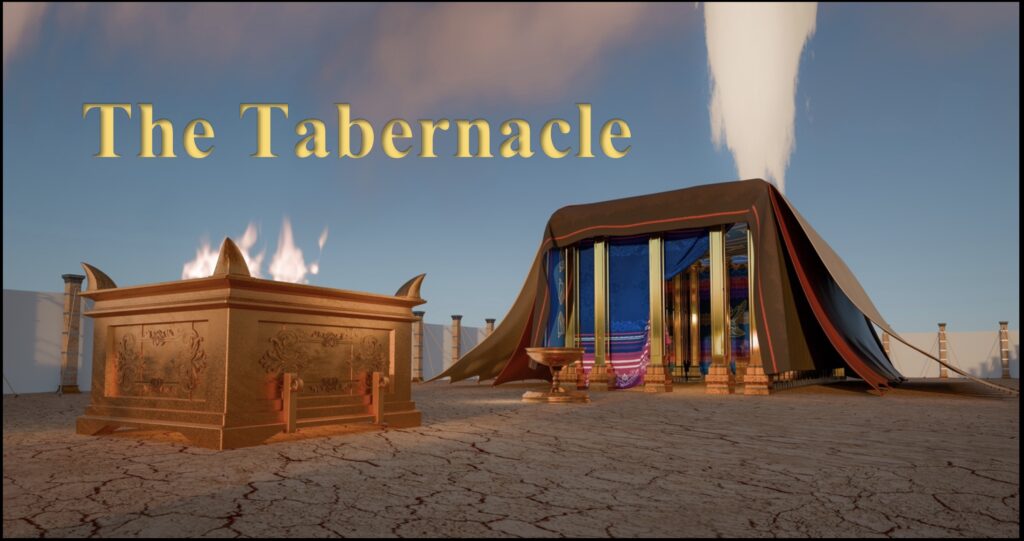
The Tabernacle Series
The Tabernacle Series
Exodus 27:1-8 / 30:17-21

Discover a powerful new way to think about your relationship with God as we study His word in its ancient Hebraic context. No matter where you are on your journey, you’re invited to join us as we uncover the Bible’s hidden secrets and discuss vital issues that impact our spiritual lives.
You can also find us on these and other popular podcast platforms.
Listen on Apple Podcasts . Listen on Spotify . Listen on Stitcher . Listen on Google Podcasts
Series: Special Teachings
|31 Minutes
Two Things Have I Heard (Part 4 – The Greek & Hebrew Scriptures)
This is the fourth of a four-part series about God's use of menorah patterns throughout the Scriptures. Psalm 64:11 says, "One thing God spoke. Two things have I heard." This principle is ubiquitous in the Bible and it is my desire that we all begin to look for and discover the pairs of events, stories and words that occur throughout the Bible. In this episode, we examine a sampling of these menorah patterns in passages from the Hebrew Scriptures ("Old Testament") whose counterparts are in the Greek Scriptures ("New Testament").
Series: Special Teachings
|33 Minutes
Two Things Have I Heard (Part 3 – The Greek Scriptures)
This is the third of a four-part series about God's use of menorah patterns throughout the Scriptures. Psalm 64:11 says, "One thing God spoke. Two things have I heard." This principle is ubiquitous in the Bible and it is my desire that we all begin to look for and discover the pairs of events, stories and words that occur throughout the Bible. In this episode, we examine a sampling of these menorah patterns as they are found in the Greek ("New Testament") Scriptures.
Series: Bread Crumbs
|43 Minutes
Series: Tehillim Talks
|21 Minutes
Psalm 67 is called The Menorah Psalm. It is unique in its structure and contains many hidden features that set it apart from every other psalm. It is also recited each night during the 49 days of counting the omer between Passover and Pentecost. Come join this intriguing look into this beautiful "menorah" psalm.
Series: Special Teachings
|29 Minutes
Two Things Have I Heard (Part 2 – The Hebrew Scriptures)
This is the second of a four-part series about God's use of menorah patterns throughout the Scriptures. Psalm 64:11 says, "One thing God spoke. Two things have I heard." This principle is ubiquitous in the Bible and it is my desire that we all begin to look for and discover the pairs of events, stories and words that occur throughout the Bible. In this episode, we examine a sampling of these menorah patterns as they are found in the Hebrew Scriptures. This will revolutionize your study of God's Word. I promise!
Series: Special Teachings
|28 Minutes
“Two Things Have I Heard” – Introduction
This introduction is the first of a four-part series about God's use of menorah patterns throughout the Scriptures. Psalm 64:11 says, "One thing God spoke. Two things have I heard." This principle is ubiquitous in the Bible and it is my desire that we all begin to look for and discover the pairs of events, stories, words that occur throughout the Bible. This will revolutionize your study of God's Word. I promise!
Series: Tehillim Talks
|27 Minutes
Psalm 66 is a beautiful song of praise to God; a psalm composed to bring glory to His great name. It looks to the days of the Messianic Kingdom when the whole earth will bend the knee to Israel's King Messiah. But if this psalm praises God's name, why is His name not mentioned a single time? Come delve into this amazing and uplifting psalm.
Series: Tehillim Talks
|26 Minutes
How did David cope with the many trials described in his previous psalms? What tactic did he employ to alter his perception of all his troubles? The key lies in this beautiful song. We will also learn something about praise that may shock you!
Series: Bread Crumbs
|30 Minutes
Series: Tehillim Talks
|17 Minutes
The previous psalm (Psalm 63) described how David dealt with physical enemies who were out to kill him. But in this psalm, David addresses the issue of hidden and anonymous spiritual enemies. A close study of this psalm can be a great boost to one's faith and peace.
Series: Tehillim Talks
|23 Minutes
If you knew that dangerous men were hunting you to kill you, what would you pray for? Protection? Rescue? Superpowers? David found himself in exactly this predicament but prayed for none of these things. What did he pray for? Join us as we explore this short but beautiful and inspiring psalm together.
Series: Bread Crumbs
|42 Minutes
Series: Proverbs
|95 Minutes
Series: Proverbs
|80 Minutes
Series: Proverbs
|62 Minutes
Series: Bread Crumbs
|35 Minutes
Series: Bread Crumbs
|36 Minutes
Series: Bread Crumbs
|31 Minutes
Series: Tehillim Talks
|24 Minutes
For one reason or another, everyone we know fades away. Every relationship will eventually fail, whether through unfaithfulness, illness, death, or betrayal. Where can we find steadfastness in this transitory world with all its transitory relationships? Only in God Himself. That is the theme of this beautiful psalm - the glorious promise of God's eternal faithfulness.
Series: Special Teachings
|13 Minutes
This special teaching (and its peculiar title) was inspired by watching a YouTube video in which one online preacher criticized another accusing him of preaching "Law" in his sermon. This got my mental gears turning and ...well, the result is this short teaching. I hope you enjoy it!
Series: Tehillim Talks
|18 Minutes
In this psalm, David uses five different things to describe God's faithful protection. What are these five things? And why are they listed in this order? We will also learn about the special vow made to God and how it may have resulted in the book of Psalms itself.
Series: Special Teachings
|10 Minutes
Salvation, Egypt, and Messiah’s Return
The book of Exodus contains the Hebrew word for "save" only two times. in fact, these are the first two times the word "save" is used in the Bible. Both instances involve Moses, but in two quite dissimilar scenarios. Come with us as we take a look at these two unique passages and see what we can learn about Messiah's two comings.
Series: Tehillim Talks
|19 Minutes
Did you ever feel like you were losing even when you were winning? David felt that way at times, too. In this psalm, he expresses this confusing feeling of loss even in the midst of victory. Join us for a look into this phenomenon and why it occurs.
Series: Bread Crumbs
|32 Minutes
Series: Tehillim Talks
|28 Minutes
We are all familiar with so many of David's psalms wherein he moans about the things he is going through and expresses despair and near hopelessness. This psalm could easily have been like one of these. But Psalm 59 has a different tone. Even though David has plenty of reason to be distressed - Saul's minions had surrounded his house to kill him, after all - David seems to have a deep sense of calm and assurance. Though the context of this psalm is tragic, David exudes peace. This psalm is quite beautiful and expresses a deep stillness in the eye of the storm.
Series: Bread Crumbs
|35 Minutes
Series: Be Our Guest
|36 Minutes
Series: Be Our Guest
|28 Minutes
Series: Be Our Guest
|32 Minutes
Series: Tehillim Talks
|40 Minutes
Psalm 58 is a unique psalm which I call Song of the Sociopath. It describes the intractability of certain souls who resist the righteous path and are bent on persecuting the innocent. Such a person was King Saul's counselor, Abner, who, traditions teaches, was the inspiration for this psalm. (Read 1Samuel 26.) On a different note, this psalm is one of the most difficult to translate. Hence, I present here three translations: The English Standard Version, the Robert Alter translation, and the Artscroll Publishers translation. We should not be surprised that grappling this psalm is as difficult as understanding the twisted mind of the sociopath.
Series: Tehillim Talks
|34 Minutes
This is the sixth psalm (in a series of nine) where David prays for deliverance. But in this psalm, David does something completely different. Can you discover what it is? We also learn something fascinating about the Hebrew word for "dawn". We will learn about these and many other valuable insights in this short but powerful psalm.
Series: Bread Crumbs
|33 Minutes
Series: Tehillim Talks
|32 Minutes
Psalm 56 begins a series of five psalms called "Michtams". It is uncertain what this term means, but it is somehow related to fine gold, thus making these "golden" psalms, or maybe David's favorite psalms. Psalm 56 is also the second psalm inspired by the time David disguised his sanity while behind enemy lines. (See also Psalm 34.) In this psalm David expresses his loneliness while under persecution. He set this psalm to a tune called "The Mute Dove of Distant Places". But, as David's powerful psalms often do, this one ends on a high note of hope in God.