The Ark of the Covenant
Welcome to Torah Today Ministries and our continuing series on the tabernacle. And in this episode, episode two, we’ll be looking at the Ark of the Covenant. Now, in the previous episode we looked at the introductory material in Exodus describing the materials, the collection of those materials, and some other pertinent things that are very important to lay a foundation for what we’re discussing. So if you haven’t listened to that teaching, make sure you go back and listen to that, watch it, get the notes, and look at the images.
But today we’re going to focus strictly on the Ark of the Covenant.
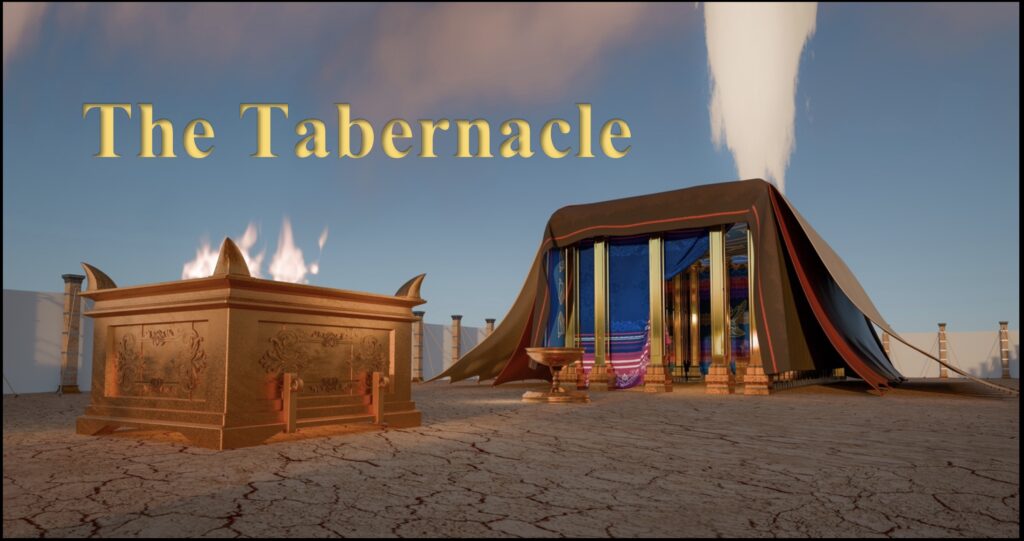
Now, just as a little review — let’s take a look at how the tabernacle may have looked if you had a drone flying over it and if part of the tabernacle were cut away. Those are some big if’s, aren’t they? But here you see the outer court made of white curtains that were hung on posts. And then in the outer court there, you see the bronze altar and the bronze laver. Then you come to the tabernacle proper, the building itself. And in this larger part — this was the holy place. And in this smaller part, shaped like a cube, was the holy of holies.
This might be clearer if we look at a diagram. Here’s the outer court — this big rectangle. You entered from the east, and there’s the brazen altar, and there’s the bronze laver. And then you would go through a partition, and in the holy place on the north side was the table of showbread, and on the south side was the golden menorah. Then right here was the golden altar of incense. And that’s as far as a priest could go — because right in front of that golden altar of incense, or you might say behind it depending on your point of view, is the parochet (פָּרֹכֶת) — the veil that separated the holy place from the holy of holies. And in the holy of holies, this cube-shaped space, was the Ark of the Covenant.
Now I want to set a riddle here for you, and it’s something that we will solve a little bit further down the road in a future episode. But most people, if you ask them how many objects were there in the tabernacle — how many pieces of furniture, for lack of a better word — they’ll say six. They’ll say there’s the altar and the laver in the outer court, so that’s two. There’s the table and the menorah and the golden incense altar in the holy place, so that’s three more, for a total of five. And then the Ark of the Covenant, which makes six. But that answer is incorrect. There are seven pieces of furniture. There are seven distinct articles being described. Can you figure out where you’re missing one?
And here’s the riddle for you to ponder: though there are seven pieces of furniture — seven articles that were made — each article had a mate. It had something that it paired with. Obviously in the outer court you have the altar and the laver. And in the holy place you would have the table and the menorah. But you’ve also got this golden incense altar. So what pairs up with what? But trust me on this — think about it, see if you can come up with the answer. And if you want to send me an email before we get to that episode to tell me what you think your guess is, I’d love to hear from you. But there are seven objects, not six. And yet though there’s an odd number, each one has a mate.
All right — so there’s your riddle to be pondering.
So let’s continue. Now, whenever we discuss the tabernacle, someone has this question. We’ve looked here and seen that the golden altar of incense is in the holy place, and that’s how it’s described in the Torah. But there is this passage in Hebrews, in Hebrews chapter 9, which describes the golden incense altar as being inside the holy of holies. And that can be confusing, and they think: did the writer of Hebrews get it wrong? What’s going on? Did they later move it from the holy place into the holy of holies?
So before we go on with the tabernacle, let’s pause here for a moment and address this question that’s causing confusion. Let’s look at the passage in Hebrews.
Oh, and by the way — there is a beautiful artist’s rendering of what the Ark of the Covenant may have looked like. And may I point out two errors that you almost always find in depictions of the Ark of the Covenant. Now this picture has it right. But in most depictions of the ark, they have the bars — the staves that carry the ark — running lengthwise from left to right. That is incorrect. The staves that carried the ark went from front to back on the short sides of the ark. So when you see Indiana Jones next time in the movie about the Ark of the Covenant — they got it wrong.
The second thing is this: if you see any depictions of the ark being carried by the priests, they almost always show the ark uncovered like it is here. But whenever the ark traveled, you couldn’t see the ark, because it was covered by the veil. They would take the veil down and lay it over the ark so no one could see it. So this is a fun little trivia game you can play with friends. If you somewhere come across a picture of the ark of the covenant being carried, you can say: what are the two mistakes in that picture? One — the ark is not covered when they’re carrying it. And second — the staves are running the wrong direction. But this is the correct orientation.
All right. Now back to our passage in Hebrews. This is the passage that causes confusion:
For a tent was prepared, the first section, in which were the menorah and the table and the bread of the presence (which was on the table). It is called the holy place. Behind the second curtain was a second section called the holy of holies, having a golden — and your translation will probably say “altar” — a golden altar and the ark of the covenant… — Hebrews 9:2–4
But that word there — that is often mistranslated “altar” — is not a word that means altar. The Greek word there in Hebrews is thumiaterion (θυμιατήριον). Thumiaterion. It is not an incense altar — it is an incense censer. It’s a handheld something that they could put incense in and carry the incense with them. We find this same Greek word a few times in the Septuagint, which is the Greek translation of the Hebrew Bible. One place is in 2 Chronicles 26. The other place is in Ezekiel chapter 6. And if you look at those passages, read through them, you’ll see that it describes people carrying an incense censer in their hand. And the word used there in both cases is thumiaterion.
So what we see here in Hebrews is not a golden altar of incense but a handheld censer.
But still — what’s going on? Why would there be a handheld censer in the holy of holies? That is because the writer of Hebrews is describing the day of Yom Kippur (יוֹם כִּפּוּר). This is the one day of the year that the high priest got to enter the holy of holies. And he’s commanded — and you can read about it in Leviticus chapter 16 — he’s commanded to take in a shovel of hot coals that come from the outer altar, and to take some incense, and go through the curtain in front of the ark of the covenant and to put the incense on the censer. In this case, the censer is a shovel. So there’s no golden altar of incense inside the holy of holies. But once a year on Yom Kippur, the high priest would take a censer — a thumiaterion — into the holy of holies and burn incense there. That is what is being described in Hebrews chapter 9. It’s the day of Yom Kippur.
Okay. Now that we have those matters aside, let’s move on with our description of the Ark of the Covenant. We’re going to pick up right where we left off in episode one, and we’re going to be in Exodus chapter 25 starting in verse 10.
Now up to now, the materials have been described, the collection of those materials, and God has told Moses to make the tabernacle according to the pattern that he saw on the mountain. But here we begin the actual description of the tabernacle itself. And where does it begin? With the ark.
Now this is important — pause here for a moment. Usually when you’re describing a building, and if you watch one of the house tours on YouTube, it starts with the front door or it’ll show the outside of the house from an aerial view. It never starts right on the inside of the house and works its way out. But God does everything from the inside out. The enemy is the one who likes to work from the outside in. But God works from the inside out. And so he begins the description of his tabernacle with the ark of the covenant inside the holy of holies. And this is appropriate, because the ark of the covenant is the most important, most holy object in Jewish history. And everything in the tabernacle is built around this holy ark.
Well, let’s read what it says:
They shall make an ark of acacia wood. — It’s made out of wood —Two cubits and a half shall be its length, a cubit and a half its breadth, and a cubit and a half its height. You shall overlay it with pure gold inside and outside shall you overlay it—
Now when I hear that — “overlay it with pure gold inside and outside” — it reminds me of something. And I think of the ark that Moses’ mother made out of reeds. It’s a different word for ark — this is the word aron (אָרוֹן), and that word for ark is the word tevah (תֵּבָה). But it says that she coated it on the outside and on the inside with pitch so that it would float. Well, here we have another box — but this one’s made out of acacia wood, and it is coated on the inside and the outside with gold. Something to think about. Everything does come in pairs after all, doesn’t it?
And you shall make on it a molding of gold around it. You shall cast four rings of gold for it and put them on its four corners, two rings on the one side — or you could say the one end of it — and two rings on the other side, or the other end of it. You shall make poles of acacia wood and overlay them with gold. And you shall put the poles into the rings on the sides of the ark to carry the ark by them. The poles shall remain in the rings of the ark — they shall not be taken from it. And you shall put into the ark the testimony that I shall give you. — Exodus 25:10–16
Now here is the word for ark that is used here — aron, aleph-resh-vav-nun (ארון). And Hebrew is this wonderful language of transcendence — this extraterrestrial language — and God being involved in every jot and tittle of the Hebrew Bible. It’s interesting to see that if you take this word and spell it backwards — nun-vav-aleph — it spells the word norah (נוֹרָא), which means “awesome” or “fearsome.” So the aron, the ark, was something that was norah. It was awesome, and it should be treated with great respect.
If you recall the story of when David had the ark brought to Jerusalem — he had the tabernacle and everything moved to Jerusalem, and he had it carried on a cart instead of the way it’s supposed to be, on the shoulders of four priests. And the cart hit a bump, and the ark started to tip, and a man put his hand out to steady the ark and he dropped dead right there. And boy, the parade came to a screeching halt. But David was transporting it incorrectly. It wasn’t the way God ordained for the ark to travel.
And there’s a lesson there, if I can take a little rabbi trail. We need to be careful that we do not innovate in our ideas and our attempts to promote God’s message in the world. To further God’s kingdom, to continue to move his kingdom forward, we need to do it the way he has ordained. And just as the ark represents God’s presence in the world, it is to be carried on the shoulders of four priests. David thought he could improve on that method of transportation and put it on a new cart. The cart began to tip. A man put out his hand to steady it. The man died. We need just to be careful to do things the way God says. There’s no room for innovation when it comes to God’s commandments.
Now if we take this word aron — anyone who reads Hebrew has seen this and you can’t help but notice it — it’s very similar to the name Aaron, the high priest, Moses’ brother. In fact, Aaron’s name, which is Aharon (אַהֲרֹן) in Hebrew, is spelled with the same letters as aron with the addition of a hey (ה). So instead of aleph-resh-vav-nun, it’s aleph-hey-resh-vav-nun. A heh is the letter — it sounds like an “h,” just as an exhalation of breath represents the spirit.
And when you think about it, a high priest is also one who represents God’s presence in the world. Yeshua (יֵשׁוּעַ) is our high priest. He was God’s presence in the world. But the ark was not a living thing — the high priest is. The high priest is to be like an aron but with breath — alive. Something that lives and moves and breathes.
And you know what? We are to be priests — a kingdom of priests — with Messiah as our high priest. And the ark was always carried on the shoulders of priests. And there’s a picture here: we as believers, as disciples of Yeshua, should be in community with others. And together we should be like living aronot (אֲרוֹנוֹת) which carry God’s presence and bear his presence in this world. We should be bearing his image, and it’s something that we do together. There’s much to talk about here, much to think about — but I don’t want to do all your thinking for you. This is a place you may want to pause or come back to later. Really meditate and think about this. It would make a great devotional too. If you are in a position trying to think of something to share with the group, this is something you could really sink your teeth into and come up with many great insights and have great discussion.
Well, let’s move on. God says he’s going to put his testimony in it. And the word there for testimony that we just read is the word edut (עֵדוּת). Edut. It comes from the word ed (עֵד), which is ayin-dalet — testimony. Ed means witness — it’s almost the same meaning.
Whenever I discuss the word ed, ayin-dalet, I always have to go back to the Shema (שְׁמַע). And here you see the Shema as it appears in the Torah scroll. It’s the middle line: Shema — hear, O Israel — and then there’s God’s holy four-letter name, Yod-Heh-Vav-Heh (יהוה). We say Adonai (אֲדֹנָי) or Hashem (הַשֵּׁם). So: Shema Yisrael, Adonai Eloheinu, Adonai Echad — Hear, O Israel, the Lord our God, the Lord is one.
But notice something unusual about this line. In every Torah scroll in the world, the last letter of Shema and the last letter of Echad are written oversized. And if these two letters are not written oversized, that Torah scroll is not kosher and it has to be repaired before it can be used in a Torah service in the synagogue.
What’s so important about these two letters? Well, you’ll notice that they spell the word ed — ayin and dalet. Because the Shema — that God is one, that God is the one with whom we have to do, he is the one in whom we live and move and have our being, he’s the one who is in control, he is the Be-er, we are the be-ings — this is his testimony. This is his ed to the world. And this should be our ed to the world — that God is one. There is no competition with him.
And in Psalm 132:8, there’s another interesting name for the ark. I think this is the only place this is found:
Arise, Adonai, and go to your resting place, you and the Aron Uzecha (אֲרוֹן עֻזֶּךָ). — Psalm 132:8
The ark of your strength. The ark of your strength. This testimony of God being one — there’s something about this that the psalmist is referring to as being God’s strength. This is God’s power in the world. And this is the power to change lives. When people come to realize not just that there’s only one God, but that one God is the God of Israel and that he’s our God — that changes your life forever. That is a strength. That is our strength. And living out the Shema should be the very strength of our lives. There’s much going on here — here’s your second devotional for free that you can use. There is much to think about and ponder with this.
Now, this last year, as I’ve been going through the Torah cycle, I try to do something a little different each year. As I go through, I’ll focus on one thing, and another year I’ll focus on another. This past year, I focused on the first place a Hebrew word appears. And so of course in Genesis the first few chapters all the words are new. But once I got up to about chapter five or six, I started marking each Hebrew word where it appeared for the very first time.
And what’s interesting is as I read through the description of the ark of the covenant and the holy of holies and the tabernacle, there are all these words that are used for the very first time. I jotted down just a few of them. We read about the cover that goes on the ark — the lid of the ark — kaporet (כַּפֹּרֶת). First time it’s found is in the description of the cover of the ark. We read about a table — a table of showbread — that table is shulchan (שֻׁלְחָן). First time “table” is mentioned in the Bible is in the description of the tabernacle. The menorah (מְנוֹרָה) — first time a menorah is mentioned is in the tabernacle. We read about the curtains — first time this word for curtains is used is here in the tabernacle. It talks about the planks that go in the walls — first time planks are mentioned, here in the tabernacle. Staves — these poles that are used to carry some of the items — badim (בַּדִּים) is the Hebrew word. First time they’re mentioned, here in the tabernacle. The veil — the parochet — first time it’s mentioned, here in the tabernacle. And I could go on with other words that are all used for the very first time right here in the tabernacle.
But aron — this isn’t the first time. This thing that is the very heart and soul and the focus of the tabernacle and the holy of holies — this is not the first time aron is mentioned. Everything else first time is mentioned here. Aron — no. It’s the second time it’s mentioned.
So if you want to pause right now and try to think: where is the first place that aron — an ark — is mentioned? Now it’s not Noah’s ark — that’s a different word, that’s the word tevah. That’s the same word that describes the basket that Moses’ mother made to put him in. Those are tevah — they’re not aron. Where is the first aron in the Bible? Okay, if you want to pause, this is your chance to do it. But right now im going to go on.
The first aron mentioned in scripture is in Genesis 50, verse 26:
So Joseph died being 110 years old. They embalmed him, and he was put in an aron in Egypt. — Genesis 50:26
Ah — there’s the first aron ever mentioned in the Bible.
Now this can’t be coincidence — that you have all these first mentions when it comes to the tabernacle, but aron is the second mention. There is an aron that comes before that precedes it. And this is the ark — the box, the sarcophagus we would call it — in which Joseph’s bones were put.
Joseph. Now if you’ve listened to any of the teachings I’ve done through the book of Genesis and especially about Joseph, you know that there’s no individual in the Bible whose life more closely parallels that of Yeshua than Joseph. No wonder that God ordained that Yeshua‘s mother, Mary, would marry a man named Joseph, and that Yeshua would grow up being known as Yeshua ben Yosef (יֵשׁוּעַ בֶּן יוֹסֵף) — the son of Joseph. Now Joseph was not his physical father, but he was his adopted father. But Joseph is an amazing figure in scripture. He’s one who was sold for silver, who among the Gentiles took a Gentile bride. He was rejected by his brothers, during seven years of tribulation his brothers come to him. He recognizes them, but they don’t recognize him. He’s 30 years old when he begins his ministry in Egypt. I mean, I think there are like 80 or 100 parallels between Joseph and Yeshua — it’s absolutely phenomenal.
So when we think of Joseph, we think of this individual who prefigures Yeshua, the Messiah. And just as Yeshua is the savior of the world, Joseph was the savior of the world at his time. The whole world was under a famine, and if anybody in the world wanted food, they had to go to Egypt to get it. And Joseph provided life to the people of his day.
So the first ark is the one into which Joseph’s bones were placed. The second ark is the one that is described here — the second mention of an ark.
But I need to share this with you. There’s an ark mentioned later that actually comes in between these two. Let me say that again. The first mention of an ark is Joseph in Genesis chapter 50. The second mention of an ark is here in Exodus that we’re reading now about the ark of the covenant. But later we’re going to read about an ark that came in between — so chronologically it was built before the ark of the covenant. And we find that ark in Deuteronomy 10:3–5.
Here’s what happened. Moses is up on Mount Sinai for 40 days and 40 nights. God gives him the plan for the tabernacle, gives him the tour, gives him all this information. So after 40 days he comes down with the two stone tablets. He sees the people sinning with a golden calf. He throws the tablets down and they’re broken. And you know the story. So he goes back up to the top of the mountain for another 40 days, comes down with another — a second copy of the Ten Words.
But this is what happens. And in Deuteronomy, Moses goes back and describes what occurred:
So I made an ark of acacia wood and cut two tablets of stone like the first and went up the mountain with the two tablets in my hand. — Deuteronomy 10:3
God cut out the first two tablets that he gave him — that got smashed. But for the second two, he told Moses: you cut out the tablets, bring them up, and I’ll engrave on them the same words.
And he wrote on the tablets in the same writing as before, the Ten Words that Adonai had spoken to you on the mountain out of the midst of the fire on the day of the assembly. And Adonai gave them to me. Then I turned and came down from the mountain and put the tablets in the ark that I had made. And there they are, as Adonai commanded me. — Deuteronomy 10:4–5
So what we see here is: as we read the story, Moses made an ark out of wood — and then later, over a period of a year while the tabernacle is being built, Betzalel (בְּצַלְאֵל), who was commissioned to build the tabernacle, he made the ark of the covenant that we read about — that’s covered with gold on the outside and on the inside, with the cherubim and everything. But in between, Moses made a wooden ark to put the tablets in until the ark of the covenant could be completed.
Now, according to Jewish history and tradition, after the ark of the covenant was completed, the tablets were taken out of this wooden ark that Moses had built and were put into the golden ark of the covenant. But they say that the pieces — the broken pieces of the original tablets — were put into this wooden ark that Moses had built.
And this helps solve another problem. Because over in Numbers chapter 10, verse 33, it says:
So they set out from the mount of Adonai three days’ journey, and the ark of the covenant of Adonai went before them three days’ journey to seek out a resting place for them. — Numbers 10:33
There’s a problem with this. If the people are traveling, how could the ark of the covenant be three days ahead of them, out by itself just going on its own? Because when you read Numbers 10:13–28, it tells us that the ark of the covenant traveled in the midst of the people. So which is it — is it out ahead of the people, or is it traveling in the midst?
Read Numbers 10:13–28. It describes very clearly how Judah and the tribes on the east side of the camp would travel first. In the meantime, the tabernacle is disassembled. And it says that when the tabernacle was taken down, the sons of Gershon and the sons of Merari who carried the tabernacle set out. And then the tribes on the south side would set out. And while these six tribes are all traveling, the tabernacle is traveling ahead. When they get to where they’re going, the tabernacle would be set up. And then the next group would travel. Then the Kohathites set out carrying the holy things — and the tabernacle is set up before their arrival. And the Kohathites are the ones given the job of carrying the ark of the covenant. And then behind them come the three tribes on the west side and the three tribes on the north side. And so by the time the Kohathites got to where the tabernacle was set up, it would be set up, and they could put the ark right inside of it.
So what is this ark that is going three days ahead of the camp? Logic tells us it was the wooden ark — with the broken pieces in it — that went out ahead, three days ahead.
Here’s your third devotional you can use for discussion with your group. This plain wooden ark that didn’t look like much — I don’t know what kind of a woodworker Moses was. This ark sure did not have the glorious appearance that the golden ark of the covenant had. And inside it were broken tablets. Everything about this wooden ark that’s out three days ahead of everybody else — to me it pictures Yeshua, who went out ahead. But he’s coming again. And when he returns, it will be with glory. The first time he went out, he was broken. But when he returns, it’ll be whole. We broke him — the first time, we crucified him and buried him. But when he returns, it’s going to be with incredible glory. Something to think about.
Well, let’s move on. I know this is a longer teaching than I normally like to do, but we’re going to pick up the pace. I mentioned at the outset that there are seven pieces of furniture in the tabernacle, not just six. And here’s where the seventh is.
We always think of the ark and the cover being one piece of furniture. But when you look at the descriptions and how these two things are discussed, you’ll see that they’re two different pieces. They weren’t separated from each other — the cover was put on top of the ark — but they’re described as two completely different things. They’re described as if we’re making a whole new thing. We read about the making of the box, but now look at the language that’s used in the next verse, Exodus 25:17:
Just as he said “you shall make an ark,” he now says “you shall make a cover.” In other words — we’re making a new thing—Here’s the second thing we’re going to make. So just because the box and the cover were in contact with each other, we must still differentiate and think of them as two different things.
And you shall make a cover of pure gold. Two cubits and a half shall be its length and a cubit and a half its width.
So this would fit exactly right on top of the box,
And you shall make two cherubim of gold — of hammered work shall you make them — on the two ends of the cover. Make one cherub on the one end and one cherub on the other end. Of one piece with the cover shall you make the cherubim on its two ends. The cherubim shall spread out their wings above, overshadowing the cover with their wings, their faces one to another. Toward the cover shall the faces of the cherubim be. And you shall put the cover on the top of the ark. — Exodus 25:18–21
And look at Exodus 26:34 — this makes it clear as well. It says: you put the ark in the holy of holies, and then you put the cover on top of the ark. Two different things. They should be treated as two different things, though they were carried together.
And in the ark shall you put the testimony that I shall give you. There I will meet with you. And from above the cover, from between the two cherubim that are on the ark of the testimony, I will speak with you about all that I will give you in commandment for the people of Israel. — Exodus 25:21–22
Now you’ll notice I use the word “cover” here. Your translations may say “mercy seat.” Well, I hate to be the one to break it to you, but the phrase “mercy seat” occurs nowhere in the Bible. It’s a beautiful sentiment, and it just has a beautiful sound to it. And we’ve heard it for so long we just always think of the mercy seat, the mercy seat. But it’s never called that in the Bible.
It’s called a kaporet (כַּפֹּרֶת) — from the word kapor (כָּפַר) — which means “to cover.” The word kippah (כִּיפָּה) you put on your head comes from the root of this word — it simply covers. The day of Yom Kippur (יוֹם כִּפּוּר) is the day of covering. We call it atonement. But kapor means “to cover.” The same way the word “cover” is used in English with all of its different meanings and shadings of meaning, the word kapor is used the same way. So I just like accuracy. And though “mercy seat” is a beautiful statement and conjures a beautiful image of going to a place where you find mercy — and you would find mercy there, going to the tabernacle — it’s just not what it’s called. So you can check it out on your own and prove me wrong.
And here is the word kaporet for cover, and there are keruvim (כְּרוּבִים). These we think of as fat little baby angels with wings. No — cherubim were the military angels. These were the mighty angels of warfare.
The first time we see cherubim is in Genesis 3:24:
He drove out the man, and at the east of the garden he placed the cherubim and a flaming sword that turned every way to guard the way to the tree of life. — Genesis 3:24
What we see here in the tabernacle is God once again providing access to the tree of life. The tree of life is in the garden of Eden. The entrance is on the east. And when Adam and Eve sinned, they were evicted from the garden. And God stationed cherubim there to guard the way back to the tree of life.
The tree of life is an image for God’s Torah, for God’s truth. And the commandments were put in the ark, and the cherubim on top as guardians. And then on the parochet — we’ll read in the next episode — in the parochet, the veil that separated the holy of holies from the rest of the tabernacle, there were cherubim embroidered in it, again guarding the way into the tree of life.
Ah, but what happened when Yeshua was crucified? When he was crucified, when he breathed his last, that veil that separated the holy of holies from the holy place was torn in two from top to bottom. And the cherubim, you could say, stepped aside — as if to say: come on in. Access to the tree of life is once again open to mankind. It’s an amazing and beautiful picture.
But I don’t want us to miss that last part of what we read there in Exodus 25. He says that the cherubim are hammered out from the ends, and their wings come across the top and they touch. And he says:
There I will meet with you, and from above the cover, from between the two cherubim that are on the ark of the testimony, I will speak with you. — Exodus 25:22
In other words — this empty space, this empty space that is framed by the wings of the cherubim — it’s from that empty space that God speaks. Almost as if the entire purpose of this cover is to provide an empty frame. A frame that appears empty but is not empty at all, because it’s from that empty space that God speaks. Our God speaks from no thing — from nothing.
In every other religion of the world, their god speaks through an idol. You see this thing and the god is supposed to speak from the idol. But the God here — this is the very opposite of an idol. God speaks from an empty space that is framed by the wings of two mighty warrior angels. The empty space. God speaks out of the nothingness. Our God who is invisible, who is intangible, who is completely non-physical. Our God who is spirit speaks to us out of this framed empty space. But oh, what a God he is. What an amazing God he is.
We will be talking about this concept more in the future. But Numbers 7:89 says:
Now when Moses went into the tent of meeting to speak with him — with God — he heard the voice speaking to him from above the cover that was on the ark of the testimony, from between the two cherubim. So he spoke to him. — Numbers 7:89
Now here are just a few things to keep in mind. There are some observations about the tabernacle that are easy to miss, even though they’re obvious once you see them. In the outer court we have two objects that are on what you might call an x-axis. An object of fire — that’s the altar. An object of water — it’s the laver. They’re on an x-axis. They’re fairly far apart. When you go to the holy place, we now have a table and a menorah. They’re on a y-axis, and they’re closer together. But then when you go into the holy of holies, we have two objects that are on a z-axis — in other words, up and down — and they are in complete contact. So we see that as you move from outside to inside, the pairs get closer. X-axis — far apart. In the holy place, y-axis — closer together. The holy of holies, z-axis — in contact. As you go into the holy of holies, as you leave the world behind and enter the holy of holies, you come to a place of greater contact and greater intimacy.
So those are just some things to keep in mind. Something else you might notice is that each of these pairs — each pair — is made up of something made from wood covered with gold, paired with something that is hammered out of metal.
The bronze altar, which is right here, was made out of wood covered with bronze. But the laver is made out of hammered bronze — completely out of metal. Here in the holy place, we see a table made of wood covered with gold. But on the south side is a golden menorah made completely of gold — hammered work. And then in the holy of holies, there’s a box made of wood but covered with gold. But above it is a cover made completely of gold, hammered out.
Hm. What does this have to do with anything? There’s something else for you to ponder. What do the objects of wood covered with metal represent? What do the hammered-out objects represent? For the objects that are made out of wood covered with metal, we have very distinct dimensions given. But with the things that are hammered out, some dimensions are given but not a complete description. What do these concepts represent?
This is a very important question, but I see I’ve gone over 40 minutes and that just breaks some kind of law somewhere. And so we’re going to stop right here. But I hope I have whetted your appetite to tune in for the next episode. It just keeps getting better. So until then, I wish you shalom (שָׁלוֹם) and may God bless.
Teaching Material
Aron (אָרוֹן) — “Ark, box, chest, coffin”; spelled aleph-resh-vav-nun (ארון). The word used for the Ark of the Covenant in the tabernacle. Remarkably, when spelled backwards — nun-vav-aleph — it yields norah (נוֹרָא), meaning “awesome” or “fearsome.” The first mention of aron in scripture is not the ark of the covenant but Joseph’s coffin in Genesis 50:26 — a profound connection between Israel’s great redeemer-figure and the most sacred object in Israel’s worship. — Strong’s H727
Aharon (אַהֲרֹן) — “Aaron”; the name of Moses’ brother and Israel’s first high priest. Spelled aleph-hey-resh-vav-nun — the same letters as aron with the addition of a hey (ה), the breath-letter representing the spirit. The high priest is an aron with breath — alive, moving, bearing God’s presence in the world. — Strong’s H175
Norah (נוֹרָא) — “Awesome, fearsome, to be feared”; the word formed when aron is spelled backwards. Used throughout the Psalms and the prophets to describe the character of God. The ark was norah — it was not to be touched or handled carelessly. — Strong’s H3372
Tevah (תֵּבָה) — “Ark, box, vessel”; the word used for Noah’s ark (Genesis 6) and the basket in which Moses’ mother placed the infant Moses (Exodus 2:3). This is the word that is not used for the Ark of the Covenant — that is aron. The distinction matters: both Noah’s ark and Moses’ basket are coated inside and outside (with pitch), foreshadowing the aron coated inside and outside with gold. — Strong’s H8392
Edut (עֵדוּת) — “Testimony, ordinance”; from the root ed (עֵד) — “witness.” The tablets of the Torah placed inside the ark are called edut — God’s testimony and witness to the world. In every Torah scroll, the oversized ayin of Shema and the oversized dalet of echad together spell ed (עֵד) — God’s witness that he alone is God. — Strong’s H5715
Ed (עֵד) — “Witness”; ayin-dalet. The two letters written oversized in the Shema across every Torah scroll in the world — if they are not oversized, the scroll is not kosher. Together they are God’s testimony (edut) that he is one. — Strong’s H5707
Shema (שְׁמַע) — “Hear, listen”; the opening word of Deuteronomy 6:4 and the central declaration of Jewish faith. Shema Yisrael, Adonai Eloheinu, Adonai Echad — “Hear, O Israel, the Lord our God, the Lord is one.” The oversized ayin at the end of Shema and the oversized dalet at the end of echad encode the word ed (עֵד) — witness — making the recitation of the Shema an act of bearing witness to the one God. — Strong’s H8085 · Sefaria: Deuteronomy 6:4
Kaporet (כַּפֹּרֶת) — “Cover, lid”; the lid of the ark, almost universally mistranslated “mercy seat” in English Bibles. From the root kapor (כָּפַר) — “to cover.” The same root gives us kippah (כִּיפָּה), the head covering, and Yom Kippur (יוֹם כִּפּוּר), the Day of Atonement — more precisely, the Day of Covering. First mention in scripture is here in the description of the tabernacle. — Strong’s H3727
Kapor (כָּפַר) — “To cover, to atone, to make atonement”; the root of kaporet and Kippur. The concept of atonement in Hebrew is fundamentally about covering — the hiding of sin, the shielding of the one who approaches God. — Strong’s H3722
Keruvim (כְּרוּבִים) — “Cherubim”; the mighty angelic warriors, not the baby-faced winged figures of Renaissance art. First mentioned in Genesis 3:24, stationed at the east of the garden of Eden to guard the way to the tree of life with a flaming sword. In the tabernacle, they stand guard over the ark — and again they are woven into the parochet, the veil. When Yeshua died and the veil was torn from top to bottom, the cherubim stood aside and the way to the tree of life was opened again to mankind. — Strong’s H3742
Parochet (פָּרֹכֶת) — “Veil, curtain”; the thick woven curtain separating the holy place from the holy of holies. Embroidered with cherubim — guarding the way. First mentioned here in the tabernacle description. Torn in two from top to bottom at the crucifixion of Yeshua (Matthew 27:51). — Strong’s H6532
Betzalel (בְּצַלְאֵל) — “In the shadow of God”; the master craftsman appointed by God to build the tabernacle and all its furnishings, including the golden ark of the covenant. His name means “in the shadow / protection of God.” — Strong’s H1212
Badim (בַּדִּים) — “Staves, poles”; the carrying poles of the ark, made of acacia wood overlaid with gold. They were never to be removed from the rings — the ark was always ready to move. First mentioned here in the tabernacle description. — Strong’s H905
Shulchan (שֻׁלְחָן) — “Table”; the table of showbread in the holy place. First mention of the word “table” in the Bible occurs here in the tabernacle. — Strong’s H7979
Menorah (מְנוֹרָה) — “Lampstand, candlestick”; the seven-branched golden lampstand in the holy place. First mention in scripture is here in the tabernacle. Made of hammered gold — no dimensions given, only description. — Strong’s H4501
Aron Uzecha (אֲרוֹן עֻזֶּךָ) — “The ark of your strength”; the name used for the ark in Psalm 132:8 — apparently its only occurrence in scripture. The edut (testimony) that God is one is described by the psalmist as God’s very strength in the world. — Strong’s H5797 (oz)
Yom Kippur (יוֹם כִּפּוּר) — “Day of Atonement” / “Day of Covering”; the one day of the year on which the high priest entered the holy of holies, taking a thumiaterion (censer) with burning coals and incense. The description in Hebrews 9:2–4 refers to this day, not to a permanent fixture inside the holy of holies. — Strong’s H3725 · Sefaria: Leviticus 16
Shalom (שָׁלוֹם) — “Peace, wholeness, completeness, well-being.” — Strong’s H7965
Thumiaterion (θυμιατήριον) — “Incense censer, fire pan”; the Greek word in Hebrews 9:3–4, widely mistranslated “golden altar” or “altar of incense.” It refers to a handheld censer, not a fixed altar. The same word appears in the Septuagint (LXX) at 2 Chronicles 26 and Ezekiel 6, where it describes a portable incense vessel carried in the hand. The writer of Hebrews is describing the high priest’s Yom Kippur entrance into the holy of holies with a censer — not a relocated incense altar. — Strong’s G2369
Open All Scripture in Bible Gateway
CLICK HERE to Print Notes & Images
Hebrews 9:2-4 For a tent was prepared, the first section, in which were the menorah and the table and the bread of the Presence. It is called the Holy Place. Behind the second curtain was a second section called the Holy of Holies, having a golden censer [θυμιατήριον, thumiateirion] and the ark of the covenant covered on all sides with gold, in which was a golden urn holding the manna, and Aaron’s staff that budded, and the tablets of the covenant.
Exodus 25:10-16 “They shall make an ark of acacia wood. Two cubits and a half shall be its length, a cubit and a half its breadth, and a cubit and a half its height. You shall overlay it with pure gold, inside and outside shall you overlay it, and you shall make on it a molding of gold around it. You shall cast four rings of gold for it and put them on its four corners, two rings on the one side of it, and two rings on the other side of it. You shall make poles of acacia wood and overlay them with gold. And you shall put the poles into the rings on the sides of the ark to carry the ark by them. The poles shall remain in the rings of the ark; they shall not be taken from it. And you shall put into the ark the testimony that I shall give you.”
ארון = “ark”
נורא = “awesome”
אהרון = “Aaron”
“testimony” = עדות / from עד “witness”
Psalm 132:8 Arise, Adonai, and go to Your resting place, You and the ark of Your strength.
ארון עזך (aron uz-cha)
1st Aron in the Torah: Genesis 50:26 So Joseph died, being 110 years old. They embalmed him, and he was put in an aron [ארון] in Egypt.
2nd Aron in the Torah: Deuteronomy 10:3-5 “So I made an ark of acacia wood, and cut two tablets of stone like the first, and went up the mountain with the two tablets in my hand. And He wrote on the tablets, in the same writing as before, the Ten Words that Adonai had spoken to you on the mountain out of the midst of the fire on the day of the assembly. And Adonai gave them to me. Then I turned and came down from the mountain and put the tablets in the ark that I had made. And there they are, as Adonai commanded me.”
Numbers 10:33 So they set out from the mount of Adonai three days’ journey. And the ark of the covenant of Adonai went before them three days’ journey, to seek out a resting place for them.
Exodus 25:17-22 “You shall make a cover of pure gold. Two cubits and a half shall be its length, and a cubit and a half its breadth. And you shall make two cherubim of gold; of hammered work shall you make them, on the two ends of the cover. Make one cherub on the one end, and one cherub on the other end. Of one piece with the cover shall you make the cherubim on its two ends. The cherubim shall spread out their wings above, overshadowing the cover with their wings, their faces one to another; toward the cover shall the faces of the cherubim be. And you shall put the cover on the top of the ark [+26:34], and in the ark you shall put the testimony that I shall give you. There I will meet with you, and from above the cover, from between the two cherubim that are on the ark of the testimony, I will speak with you about all that I will give you in commandment for the people of Israel.
“cover” = כפרת (caporet)
“cherubim” = כרבים (cheruvim)
Genesis 3:24 (1st app.) He drove out the man, and at the east of the garden of Eden He placed the cherubim and a flaming sword that turned every way to guard the way to the Tree of Life.
“toward one another”
Literally: “a man to his brother”
איש אל אחיו (ish el achiv)
Numbers 7:89 Now when Moses went into the tent of meeting to speak with Him, he heard the voice speaking to him from above the cover that was on the ark of the testimony, from between the two cherubim, so He spoke to him.
REFERENCES
2Chronicles 26:19 Then Uzziah was angry. Now he had a censer [θυμιατήριον, thumiateirion] in his hand to burn incense, and when he became angry with the priests, leprosy broke out on his forehead in the presence of the priests in the house of Adonai, by the altar of incense.
Ezekiel 8:11 And before them stood seventy men of the elders of the house of Israel, with Jaazaniah the son of Shaphan standing among them. Each had his censer [θυμιατήριον, thumiateirion] in his hand, and the smoke of the cloud of incense went up.
Numbers 10:13-28 They set out for the first time at the command of Adonai by Moses. 14 The standard of the camp of the people of Judah set out first by their companies, and over their company was Nahshon the son of Amminadab. 15 And over the company of the tribe of the people of Issachar was Nethanel the son of Zuar. 16And over the company of the tribe of the people of Zebulun was Eliab the son of Helon. 17 And when the tabernacle was taken down, the sons of Gershon and the sons of Merari, who carried the tabernacle, set out. 18 And the standard of the camp of Reuben set out by their companies, and over their company was Elizur the son of Shedeur. 19 And over the company of the tribe of the people of Simeon was Shelumiel the son of Zurishaddai. 20 And over the company of the tribe of the people of Gad was Eliasaph the son of Deuel. 21 Then the Kohathites set out, carrying the holy things, and the tabernacle was set up before their arrival. 22 And the standard of the camp of the people of Ephraim set out by their companies, and over their company was Elishama the son of Ammihud. 23 And over the company of the tribe of the people of Manasseh was Gamaliel the son of Pedahzur. 24 And over the company of the tribe of the people of Benjamin was Abidan the son of Gideoni. 25 Then the standard of the camp of the people of Dan, acting as the rear guard of all the camps, set out by their companies, and over their company was Ahiezer the son of Ammishaddai. 26And over the company of the tribe of the people of Asher was Pagiel the son of Ochran. 27 And over the company of the tribe of the people of Naphtali was Ahira the son of Enan. 28 This was the order of march of the people of Israel by their companies, when they set out.